Showing posts with label Middle East. Show all posts

Wednesday, April 28, 2010

Eggs in Purgatory - Shakshouka

Warning - the following excerpt contains sensitive material.
Not for the faint of heart.
Nor for fans of free range chickens.

She shivered again, and wrapped her beige coat tightly around her. The air was heavy and stale. The chill cut through her, even her tough exterior could not provide her respite from the bitter cold.
She was tired. She had been up for days. Wondering. Waiting. When?

"It will come soon, little one".
The deep voice stirred her from her mangled thoughts.
It was Him. The Wise One.

He shifted slightly in his perch. All the way in the back he sat, in his corner. He was afforded the best view of her and all the others. The empty spaces of the ones who had left. The sallow faces of the ones who remained. The ones who sat by dejectedly. Awaiting their Fate.

She shifted to peer at him once again. Now that most of her fellow inmates had left, snatched by the Evil Guard and whisked away to their end, she could see him clearly now. He was damaged. He had the grace of a wizened warrior, and he bore his battle scars with an almost arrogant flair.
Amongst hushed whispers from the others, she had learnt that he had fallen once, whilst in the grasp of an Evil One, and the fall had somehow saved him from his Fate. They had tossed him back and left him to slowly bleed to death.

"Do not resist. It will break you and earn you a worse fate. They will throw you in the dungeon to rot. Accept it. And Breathe."
He spoke like a sage. His words heavy like the chill around her. She struggled to breathe again, the dank, musty air enveloping her like a shroud.

The sudden noise startled all of them. It was swift. The Light came, piercing at first and she squinted hard, rubbing her sore eyes. There was a gush of sweet air and it caught her by surprise as the Evil Guards grabbed her. She gasped and swallowed the air in, drinking it in madly and furiously as she flailed her arms around in a new found freedom. She was caught in a warm wave and magically placed on a cold surface. She quickly surveyed her new surroundings, her eyes failing to adjust to the light and brightness around her, but finally resting on a giant steel contraption with circular bands that lay next to her. Drops of perspiration had accumulated all over her, but strangely, she felt free.
She had arrived. At last.

Excerpt from "..And Then There Were A Dozen..; Cautionary Tales from Within the Styrofoam Carton and Behind The Refrigerator Door". All rights reserved. Copyrighted material. (c) Split Pearsonality.
Photobucket

Everyone and their yenta knows how to make a mean shakshouka, a spicy tomato and pepper sauce dotted with perfectly poached eggs. Except I don't have a yenta.

So when the Walima Middle Eastern Cooking club profiled this dish from Tunisia, I was all for trying it out. The lore is that the Tunisian Jews introduced this dish to Israel when they migrated there, and now it seems to have attained cult status as the breakfast dish to be had. It is an awesome brunch dish and fairly easy to put together.

Make a piping hot sauce with onions, tomatoes, bell peppers and paprika, then slowly add eggs into the hot mix and allow them to poach. This lovely stew-like dish is best eaten with some crusty French bread or pita bread.

I've seen Mediterranean versions of this dish labeled as Eggs in Purgatory, which for the longest time had me imagining rows of rows of eggs chanting "Forgive me Father, for I have sinned..." - but for now, you may have figured, is the premise for my "fiction" above.

.....And please do not let my terrible pictures dissuade you from trying this dish! My poached egg looks like it got into a battle before it made it out. But the dish was delicious!
Photobucket
Sahlan!

Shakshouka - (from Walima Middle Eastern Cooking Club - Celebrating Tunisia - Arlette @ Phoenician Gourmet)
This dish, with many variations, is a popular breakfast in North Africa, especially in Algeria and Tunisia. Most recipes include the eggs, but they can actually be left out if you like.

Olive oil -- 3 tablespoons
Cumin seeds - 1 tsp
Coriander powder - 2 tsp
Paprika -- 1 to 2 tablespoons
Onion, thinly sliced -- 1
Garlic, minced -- 2 to 3 cloves
Potato - 1, diced
Tomatoes, peeled, seeded and diced -- 3
Green and red bell peppers, diced -- 2 to 3
Water -- 1 cup
Eggs (optional) -- 4

1. Heat the oil in a deep skillet over medium flame. Add the cumin seeds, let them sizzle and then add the coriander powder and paprika and cook slighly to color the oil, about 10 to 15 seconds.
2. Add the onions and garlic and sauté until the onions are translucent and wilted but not browned, about 5 minutes. Add in potatoes and fry.
3. Add the tomatoes and cook for 3 to 4 minutes to reduce down a little bit. Add the peppers, water and salt and pepper and bring to a boil. Reduce the heat to low, cover and simmer for about 10 minutes. Add more water as needed to keep it from drying out.
4. Using a spoon, form four small indentations in the simmering peppers to hold the eggs. One by one, crack the eggs into a small bowl and slip each from the bowl into an indentation. Cover and simmer for another 10 minutes or so until eggs are cooked through.
5. Serve with crusty bread, pita or rice.

Variations
  • For a little spice, sauté 1 tablespoon of Harissa paste or a minced Chile pepper with the onions.
  • Sometimes fresh shrimp or a spicy lamb sausage called merguez is added to the simmering peppers along with the eggs.
  • Add 1 small, diced eggplant along with the peppers.
  • Sprinkle the top of the cooked dish with chopped parsley or cilantro.
  • Add a few olives and capers and eliminate the eggs.
  • Chill and serve garnished with hard-boiled eggs or tuna.
This dish is heading over to Padmajha at Seduce Your Tastebuds for the A.W.E.D African Event. The A.W.E.D Culinary Journey event was originally created by DK of Chef In You.

And this is also trotting off to Aquadaze at Served with Love for the food fiction event "Of Chalks and Chopsticks".

Friday, February 26, 2010

Mouhalabieh (Milk Pudding) With Balsamic Strawberries

Photobucket
There are times (plenty chez-nous) when one aches for something sweet to complete a meal. Times when the Valentines day candy stash you hid from your kids has run dry. Err...wait a minute...delete...


But given the propensity of heavy, spicy foods that you consume on a daily basis, you just need something cool and refreshing with a tinge of sweetness to refresh your palate. No heavy puddings. No gooey pastries. We'll save those for breakfast instead.


Enter Mouhalabieh - a creamy, delightful milk pudding from the Middle East that is a cinch to prepare. Milk, cornstarch and a little sugar. Boil. Cool. Eat. Lick. No-one is looking.


The following quantity is for 2 servings. Or one and a half greedy servings and a smattering for the spouse who walked in and caught you siphoning off his share.
But that totally didn't happen tonight.


Burp...
(Middle Eastern Milk Custard)

Mouhalabieh For Two
1 cup milk
1 Tbsp sugar
2 heaped tsp cornstarch
1/2 tsp rose water
1/2 tsp vanilla extract
1. Combine milk, cornstarch and sugar in a saucepan, whisk to remove lumps and bring to boil over medium heat whilst stirring.
2. Add vanilla extract and let the milk come to a full boil. Remove from heat. Mixture should have a thick consistency now.
3. Add the rose water.
4. Strain into two small dessert bowls or moulds. Let cool and refrigerate.

And now to kick up this dessert a notch further, I paired it with a few strawberries that had been doused in balsamic vinegar.

Can I get a HALLELUJAH?

I was really intimidated by the balsamic vinegar because of its "Eau De Gym Locker Room" aroma. And I begrudgingly splashed a few drops on the ripe strawberries thinking "Well, gotta try it at least once!"

Atta girl! I love how the sweet strawberries enveloped the tart vinegar and you get some sort of magical reaction of sweet and tart. It ratcheted up strawberry's sexiness to another planetary level.
What a delightful combination and why did I not try this before I dumbfoundedly pondered as I shoved in a few more strawberries into my mouth.

But while I wax eloquent about Balsamic Strawberries giving Victoria's Secret models a run for their money, I will note that the husband was not entirely pleased with them and thought the vinegar detracted from the strawberries usual wholesome selves.

But I think he was just mad that I ate his share of the pudding.


Balsamic Strawberries
5 strawberries, hulled and sliced.
1 tsp balsamic vinegar
1/2 tsp sugar

1. Sprinkle sugar on strawberries.
2. Splash balsamic vinegar on the strawberries. Mix and let rest a few minutes. Use as an accompaniment to dessert.

Photobucket

Wednesday, February 24, 2010

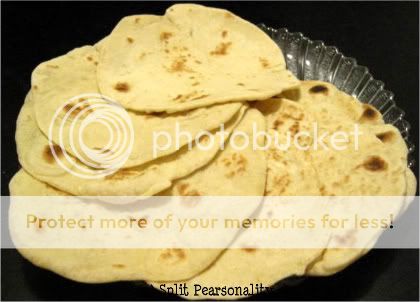
Middle Eastern Saj Bread (Lebanese Markouk)

Photobucket
Yeast and I are not good friends. I'll put it right out there. No mollycoddling the issue. Or trying to hide it. We have a duel thing going. So far, yeast has won. By not working.

I own a lot of bread baking bibles. I try to bake bread. I fail.
I drool and cry over other peoples spectacular successes in the oven.
For me, I think my oven is in cohorts with the yeast, and they are secretly planning a massive coup against me.
Speaking of which, my washing machine has been acting up too.

But I may have thwarted my kitchen extremists rise with this simple, homely bread. Saj is a leavened bread that is made throughout the Middle East (Lebanon's version is called Markouk). It is a simple mix of white flour and yeast, and after rising, it is rolled out paper thin and is cooked on a special heated domed surface, called....*you got it* ...a "saj".

It seems to be Pita Bread's thinner and more modest cousin, the one who decided to stay home and help with the farm work and do all the chores, whilst Pita, with her thicker frame and come-hither pouches, crossed paths with that good-for-nothing ruffian Mayonnaise and started living it up and partying like a rock star in Europe and the USA.
Stop me people! Before this becomes the Mills & Boons of Breads.

This bread is simple to put together, give or take the 60-75 minute rise time. It reminded me of a lot of Indian flat breads, but the yeast and the "doughiness" does stand out as different from what I am used to. I love the pillowy softness of the bread, and it is great for sopping up a saucy curry or used as a wrap.

Saj Bread (Completely and unabashedly sourced from mimicooks.com)

2 teaspoons active dry yeast
1 tablespoon sugar
1 1/4 cups warm water
3 1/2 cups all-purpose flour
1/2 teaspoon salt
Oil for coating the dough

1. Put yeast in 1/4 cup of the water; add sugar and let stand for 10 minutes.
2. Sift 2 1/2 cups of flour and the salt into a warm bowl. Form a well in the center; pour in yeast mixture and remaining warm water.
3. Begin to mix with hand, wooden spoon, or dough hook, adding remaining flour or more warm water as needed. Turn out onto a floured surface and knead for about 10 minutes, until smooth and no longer sticky.
4. Oil a large bowl; place dough in bowl and turn to coat with oil. Cover with a damp cloth and put in a warm place free of drafts for 1 1/2 to 2 hours. Dough should be doubled.
5. Knead for a few minutes then divide into balls about 2 1/2 inches in diameter.
6. Roll balls into circles on a lightly floured surface with floured rolling pin, or flatten into circles with hand.
7. Cook the flattened dough on a hot surface (I used a flat non-stick griddle pan). Cook for less than a minute on one side and then flip to cook the other side.
8. Pile the bread sheets as they are made and cover to keep soft and warm or serve immediately.

Saj Bread and Curry - Middle East meets Further East

Photobucket
I am sending this in to Joanne who Eats Well With Others' Regional Recipes Event - Middle Eastern Food and to Yeastspotting as well!

Tuesday, February 23, 2010

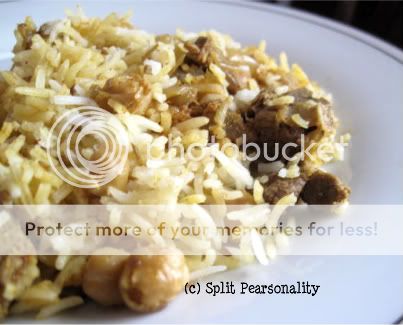
Lamb Kabouli - Cuisine of Oman

Photobucket
A month ago, the Walima group explored the country of Oman as part of the Middle Eastern Cooking Challenge and this layered rice and lamb dish was the featured Omani dish.

I will plead ignorance on Oman, I only knew of it as a tiny country in the south of the Middle East, I had heard of its capital city Muscat through a cousin who used to live there....And that's about it. When reading up on it recently, I was fascinated to find out that Oman actually used to rule Zanzibar (and parts of East Africa) and as a result was a strong player in the lucrative spice trade that emanated from that region.

But far more pressing issues were on my plate. As in, where the heck do I get lamb?

Fearless readers, I have never sourced, procured or cooked lamb before. In.My.Life.

So this was a supreme challenge for me, because I couldn't find this meat. Not at the local grocers. Not at Whole Foods. (Shock! Horror!). Not at the Asian meat market, where I got into an elaborate discussion complete with hand gestures with a fellow customer who insisted lamb was goat. He refused to believe lamb was potentially from the same animal that his wool sweater was from. I hear 'ya. especially with that sweater, dude.

So who came to the rescue?
Super Target. Tarzhay.
Yes! The same place where you can pick up socks, garden hoses and an Isaac Mizrahi dress offered me a tiny portion of lamb.
And the challenge ensued...

I followed
Yasmeen's preparation to the T, because I much fancied her way of cooking the lamb in oil with the spices and onions, as opposed to cooking the meat in seasoned water as originally suggested. Which may have technically transported this Lamb Kabouli from Oman to the Northern plains of Moghul India.
Much apologies....

Thanks to Arlette of Phoenician Gourmet for spearheading the challenge! I will definitely make this dish again....Now that I know where to get lamb from....

Lamb Kabouli (adapted for quantities and method from
Yasmeen of Health Nut and Walima Challenge)

Step 1: Prepare Omani Spice Mix (Omani Bizar A’Shuwa)
4 cloves garlic, chopped
1 tsp fresh ginger, crushed
1 heaped tsp cumin seeds
1 heaped tsp coriander seeds
1 heaped tsp cardamom seeds
2 tsp cayenne pepper
1/2 tsp ground turmeric
About 2 Tbs distilled vinegar

Combine all ingredients in an electric food processor and process until a thick paste is formed, use vinegar sparingly as it can make the overall taste too acidic Store refrigerated in an airtight container for up to 2 weeks.

Step 2: Prepare Lamb
1 lb lamb, cut in small pieces, visible fat removed
1.5 cups white Basmati rice
2 cups (Medium size can) cooked chickpeas
Whole Spices:
2 cinnamon sticks
2 whole cardamom pods
3-4 cloves
1 tsp peppercorn, lightly crushed
1 large onion, chopped fine
Omani Spice mix (above)
1/2 tsp saffron strands
Salt (to taste)
2 Tbsp vegetable oil
1 cup stock or water

1. Heat oil in non-stick pan.
2. Saute onions and half of the whole spices. When onions start to brown, add the prepared Omani spice mix.
3. Add lamb to the pan and mix with all the spices. Add 1 cup stock or water, cover pan and allow to cook till meat is tender. Depending on the cut of meat, it may take up to 30 minutes on medium heat.
4. When meat is done, add in chickpeas and incorporate.

Step 3: Cook Rice and Layer Meat1. Rinse and drain Basmati rice.
2. Bring 3 cups of water (add a large pinch of salt and remaining whole spices) to boil in another large pan. Add in rice and cook till rice is fluffy.
3. When rice is done, add lamb and chickpeas into the pot. Cover and remove from heat. After about 10 minutes, open pan and carefully mix together the meat and rice.
4. Serve.

Tuesday, January 5, 2010

Bread of the Seraglio (Aysh Al Saraya) - Cuisine of Lebanon

Off we travel to Lebanon, brought to you by the letter "L" and the Walima Middle Eastern Challenge Club. The club decided on the savoury dish Sheesh Barak and the beautiful sounding dessert - Bread of the Seraglio.

Minor problem, they decided on this a MONTH ago, and I am only posting it now, because I am what I am. It also starts with the letter "L"... Any guesses?

I fixed on dessert, because
a) I have an insane sweet tooth.
b) The dish had such a romantic name - Bread of the Seraglio....*sigh*
c) I tell you, I really have an insane sweet tooth. Sheesh Barak will have to wait another day. Sheesh......

But back to the Seraglio, which means harem by the way. Picture yourself in the Alhambra or some other dizzyingly beautiful Moorish palace...
There in the lush gardens,beautiful women lazily strum their musical instruments and are fed spoonfuls of this dessert by cherubic, dancing children.........
Till they tasted the dish churned out by their newbie cook Split Al-Pear, and they wrinkle their pretty noses in horror and run away...
Bread of the Seraglio (Aysh Al Saraya) is a Middle Eastern bread pudding composed of bread cooked in caramel, then layered with ashta and finally doused with pistachios. Heavenly. But how could I make this this go wrong?
I erred with this dish on two counts.
1. Because it specifically said to use stale white bread. And I did NOT. Well, I thought I did, I used good ol' Wonder White Bread which I rarely buy, and left it out for 2 days, only to find it as cheery and fresh as the day I bought it. So I still went and used it. When soaking it in the caramel, it became very mushy. In hindsight, I should have toasted the bread. Strike 1.
I also believe if there is a Nuclear War, there will be two things left on this planet when everything else is wiped out. Wonder Bread and Paris Hilton....
2. I let the sugar caramelize to a deep brown. Deep brown caramel has a slightly acid taste, which is fine in caramel puddings like Caramel Flan where it balances well with the eggs and milk. In this dessert, there are no eggs and milk, so my dessert turned out a little too cloyingly sweet and tart. Strike 2.
All in all, a great dessert despite my slight failure, and I thank the combined duo of Joumana of Taste of Beirut and Arlette of Phoenician Gourmet for coming up with this challenge.
Bread of the Seraglio

1 round loaf white bread, about 8 inches in diameter, 1 day old
9 ounces golden superfine sugar
4 tablespoons water
1 teaspoon lemon juice
scant 1/2 cup boiling water
1 3/4 cups Lebanese clotted cream or Ashta
2 tablespoons pistachios, ground medium-fine

1. Cut off the bread crusts and reserve the rest of the white bread.
2. Put the sugar, water and lemon juice in a deep frying pan and place over medium heat. Bring to the boil and cook, stirring constantly, so that the sugar does not crystallize in places, for about 10-20 minutes or until it is caramelized.
3. Towards the end of the cooking time, measure 7 ounces of water and bring to a boil in a teakettle. When the sugar is caramelized, start adding the hot water gradually without taking the sugar mixture off the heat. Be very careful, because the sugar will start spluttering and you could burn yourself!
4. Pour the boiling syrup all over the bread and transfer the soaked bread to the pan.
5. Place over medium heat and cook pressing the bread with the back of a spoon to mash it and make it soak up the syrup.
6. Slide the bread into a serving dish, spreading it evenly across the dish. Let it cool then cover the bread entirely with ashta.
7.Chill then cover with pistachios right before serving.

Photobucket